
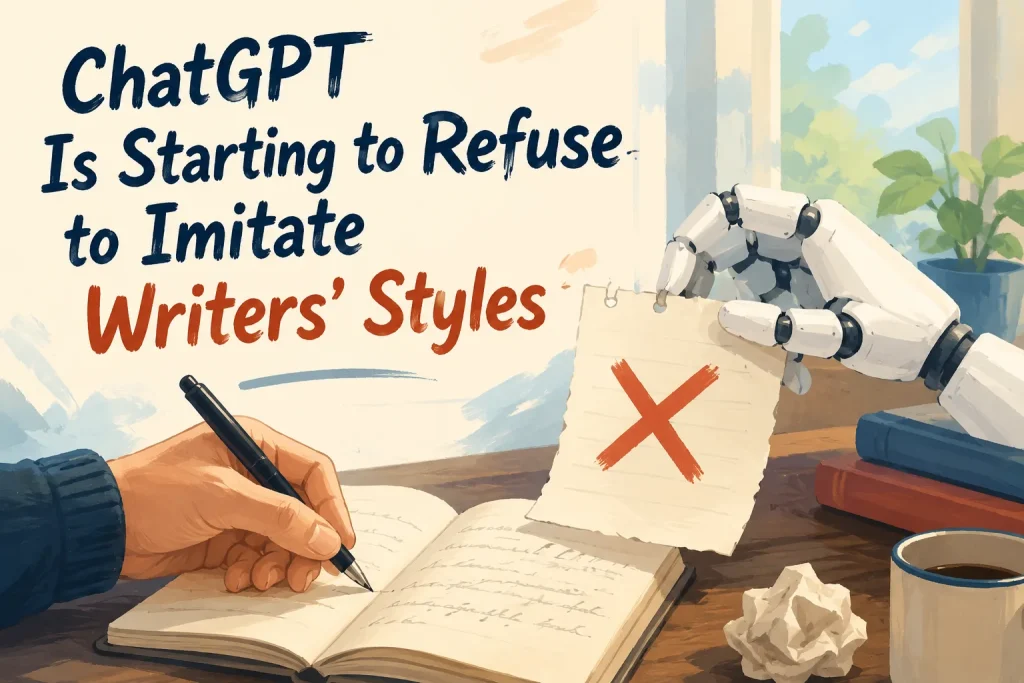
Some ChatGPT users are finding that a familiar prompt no longer works as it once did.
Ask the chatbot to write like a famous author, and it may refuse. In many cases, it will still help with the piece, but it asks the user to describe the tone, pace or mood instead of naming a writer.
Someone looking for a Stephen King-style story, for example, might have to ask for a quiet town, ordinary people and a slow sense that something is going wrong.
The change follows similar limits placed on image generators, which have faced criticism for copying the work of living artists.
Writers and publishers have raised the same concern about text. AI companies trained their systems on huge amounts of published writing, while authors often had little say in how their work was used. The worry grows when AI-generated material is sold, published or used in advertising.
Style is hard to pin down. No writer owns short sentences, dark humor or a tense opening. The issue is whether a person’s name should be used as a shortcut for reproducing a voice they spent years developing.
For writers, the new restriction may feel like basic recognition of that work.
For users, it means being more specific. Instead of typing “write this like Hemingway,” they may need to ask for plain language, short sentences and little explanation.
ChatGPT can still help shape a story. It is simply becoming less willing to treat a writer’s name as a preset.