
A new Google Earth feature lasted only one day.
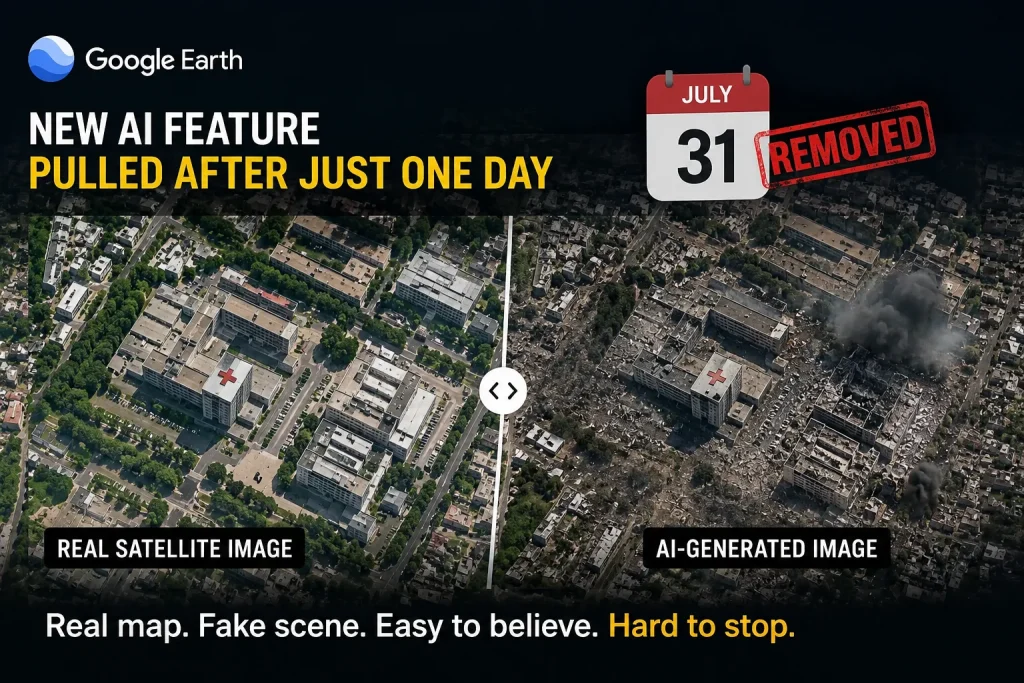
On July 30, Google added an image-generation tool to the web version of Google Earth. Users could choose a real location, type in a short description, and create a new scene based on satellite images, aerial photos and 3D map data.
At first, the feature looked useful.
Architects could show how a city block might look after redevelopment. Teachers could recreate historical scenes. Urban planners could present future projects in a more visual way. For everyday users, it was like being able to edit the real world with a few words.
But the problems appeared almost immediately.
Some testers found that the tool could create fake images of disasters and armed conflict in real places. A hospital could appear surrounded by blast damage. A border area could be filled with crowds. Buildings could look as if they had been hit by an attack.
What made the images convincing was that most of the scene was real. The roads, buildings and landscape came from actual map data. Only the destruction was fabricated.
That mix made the images easy to mistake for genuine satellite photos.
Once a screenshot was shared online with a caption such as “breaking news,” many people might not stop to question it.
Google said the generated images included digital watermarks and would not appear on the public version of the map. But that did not fully solve the problem. Watermarks can become hard to see after images are cropped, compressed or reposted. Most users also have no quick way to check where an image came from.
On July 31, about a day after the feature went live, Google removed it. The company said it had seen examples that may have violated its policies and that more safeguards were needed.
Google has not said when, or whether, the feature will return.
The incident points to a much bigger problem. People have long used Google Earth to look at the real world. Once realistic fake scenes can be placed on top of real locations, that trust becomes harder to protect.
Launching a new tool is easy. Making sure people can still tell what is real is much harder.