I ran through the full LogoAI workflow using a fictional brand.
There’s almost no learning curve
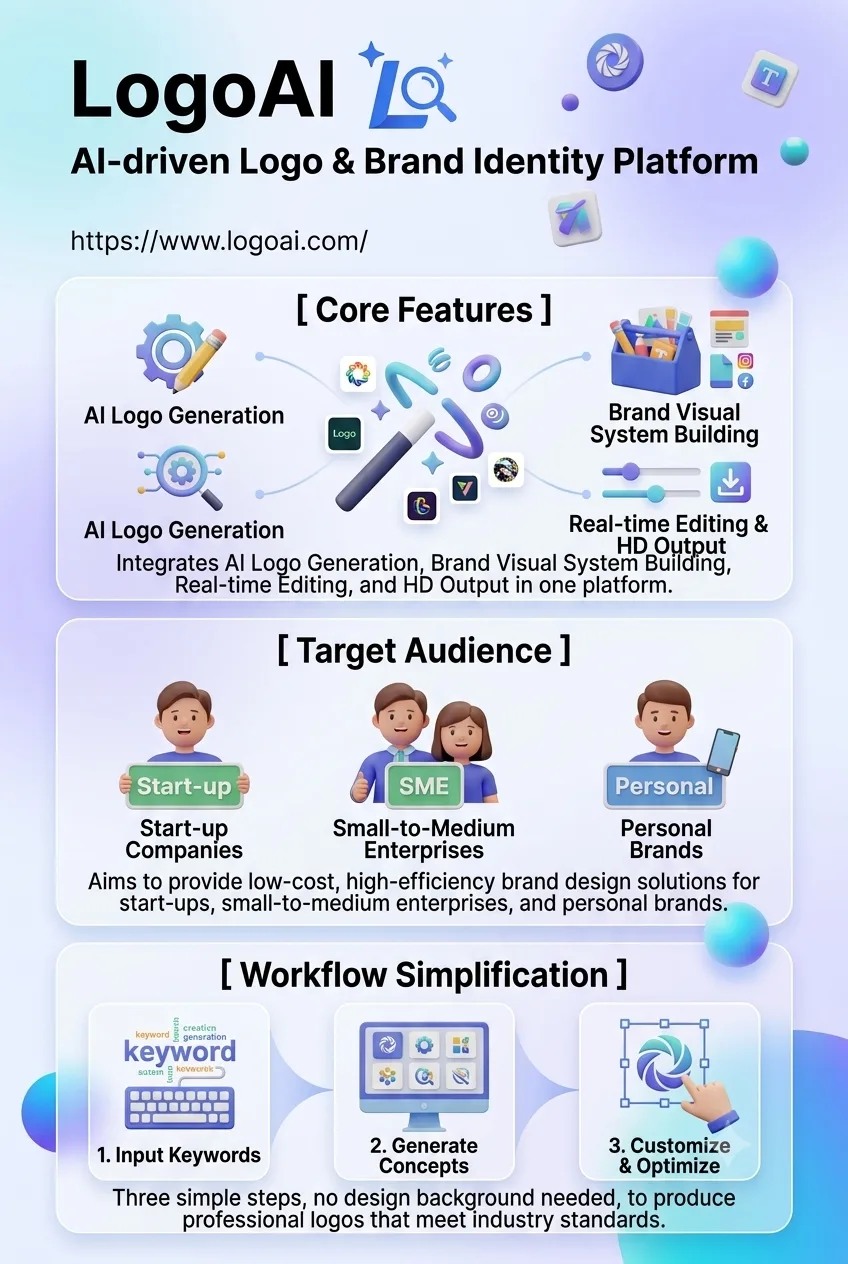
Enter the brand name, choose an industry, pick a few styles you like, and you can start generating right away.
If you only look at the logo-generation step, LogoAI doesn’t feel dramatically different from similar tools.
The real difference comes afterward.
Once you choose a logo, the system automatically extends it into brand colors, fonts, business cards, social media templates, and other assets.
That’s when LogoAI’s positioning becomes much clearer.
It isn’t just trying to solve “I need a logo.” It’s trying to handle a whole set of small design tasks that come with launching a brand.
The logos are solid; the brand kit is more useful
Looking at the logos alone, most of the results felt “directionally right and usable.”
They weren’t always especially impressive, but they also rarely went completely off track.
The real time savings come from the brand center.
Once the logo is set, colors, fonts, and social templates can all be generated quickly.
When you later create Instagram posts, Facebook assets, or posters, you don’t need to redefine the visual rules every time.
For an early-stage startup or personal brand, that’s much more useful than simply receiving a single SVG file.
A few practical issues
First, the creative ceiling for logos is limited.
A lot of the results feel like variations within established design conventions.
If you need something highly experimental or a truly distinctive brand symbol, LogoAI may not go far enough.
It’s better at quickly producing something that looks professional than replacing high-end brand design.
Second, Chinese brand names are less consistent than English ones.
Complex Chinese names can create problems with font selection and overall balance.
If the brand also has an English name, pinyin version, or abbreviation, the results are usually easier to stabilize.
Third, the free version is mainly for previewing.
Files that are actually useful for websites, print, and formal marketing generally need to be unlocked with a paid plan.
So the free version is better for testing a design direction than for long-term use.
Fourth, it’s worth double-checking before paying.
Refund policies for digital products are often strict.
It makes sense to review the logo, fonts, and layout carefully in the preview stage and only buy the final files once you’re satisfied.
Pros and cons
Pros
- It goes beyond logo generation. The follow-on brand assets are the biggest difference from a typical logo tool.
- One-time payment. Good for people who don’t want another recurring subscription.
- Strong brand consistency. Colors, fonts, and later assets can all follow the same visual system.
- Very easy to use. You can build a basic brand identity without knowing Illustrator.
- Fast for launching. It can take you from a blank slate to a usable set of brand assets quickly.
Cons
- Limited logo originality. It’s better at efficiently producing polished, conventional options than breakthrough visual ideas.
- Chinese support is only average. Chinese brand names and font pairings can still be inconsistent.
- Limited deep customization. Complex brand systems still need professional designers and design software.
- The free version is mostly for previewing. Final files and higher-spec assets require payment.
- Refund flexibility is limited. It’s worth checking everything carefully before purchase.
Best for / Not ideal for
Best for:
- Founders and freelancers. Useful for building a complete-looking brand quickly on a limited budget.
- E-commerce sellers. Good for keeping logos, storefront visuals, and social assets consistent.
- Content creators. Helpful for quickly creating a visual system for a channel, podcast, or personal brand.
- Small teams. A practical option when there’s no dedicated designer but consistent brand assets are still needed.
Not ideal for:
- Mature brands that need highly original identity work. If brand recognition itself is a core asset, a professional design team is still the better choice.
- Companies that need complex brand guidelines. LogoAI is better for the launch stage than for full-scale brand consulting.
- Anyone with very high standards for Chinese typography. Chinese-language output still needs manual review and adjustment.
- People who only need a simple profile image. There’s little reason to pay for a higher-tier package if you don’t need the broader brand system.






Comments (0)